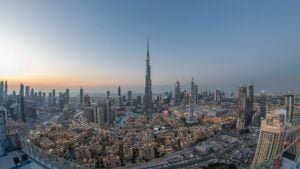

Dubai has always been a city of opportunity — where desert landscapes transformed into global skylines, and every square foot of property became a statement of ambition. Over the past few years, the market has seen record-breaking performance. And now, as investors look ahead, the biggest question echoing through every boardroom and brokerage is this: will Dubai real estate investment prices keep climbing?
Let’s break down what’s driving this market upward, what could temper its growth, and where the smartest opportunities lie in 2026 and beyond.
The Post-Pandemic Rebound: Dubai’s Continued Momentum
While much of the world’s real estate market cooled down after the pandemic, Dubai surged ahead. By the end of 2025, the Dubai Land Department (DLD) had recorded another historic year, with record-breaking sales volumes and transaction values across prime and emerging communities.
Several factors contributed to this incredible rebound:
-
Investor-friendly regulations: The UAE’s zero income tax policy, investor visas, and business setup ease make Dubai a magnet for international buyers.
-
Strong rental returns: With yields often between 6% and 9%, Dubai offers some of the highest property returns when compared to cities like London or Singapore.
-
Confidence in long-term growth: Infrastructure expansion, population increase, and a stable government vision — particularly under the Dubai 2040 Urban Master Plan — keep investor confidence high.
Simply put, Dubai real estate investment continues to benefit from real demand, global migration, and wealth diversification.
Demand vs. Supply: Why Balance Still Favors Growth
In real estate, the interplay between supply and demand determines price direction. Dubai keeps developing new communities at a fast pace, with thousands of units delivered each year. Still, demand consistently outweighs supply.
Why? Because Dubai’s population is expanding rapidly. From just under four million residents today, the city is targeting around six million by 2040. Professionals, entrepreneurs, and remote workers from Europe, Asia, and the Middle East continue to relocate here for its lifestyle, safety, and financial freedom.
This migration creates continuous housing demand. Even though new projects are completing across the city, both ready and off-plan properties are being absorbed quickly. Prime areas like Palm Jumeirah, Downtown, and Dubai Hills Estate remain hot markets, while communities such as Jumeirah Village Circle (JVC), MBR City, and Dubai Creek Harbour are becoming the next growth zones.
Off-Plan Investments: The Power of Buying Early
Over the past two years, off-plan properties have become the centerpiece of Dubai real estate investment. Developers like Emaar, DAMAC, Sobha, and Nakheel have launched projects with exceptional payment plans and lifestyle appeal. Investors can often pay as little as 1% per month and secure units that appreciate significantly before handover.
Why do investors prefer off-plan in Dubai?
-
Lower entry cost: Off-plan properties are typically priced below market rates compared to ready units.
-
Developer-backed incentives: Flexible post-handover payment options make investing accessible.
-
Capital appreciation: Many early-stage projects can increase in value by 30% to 40% upon completion.
A strong example is the Dubai Creek Harbour development, where early investors in 2022–2023 have already seen double-digit returns. If you’re considering off-plan investment opportunities, explore listings from trusted Dubai agencies that specialize in these growth communities.
Dubai’s Luxury Segment: Setting Global Benchmarks
Luxury real estate in Dubai is more than just large spaces — it’s about lifestyle, brand, and global prestige. Since 2022, the emirate has attracted ultra-wealthy buyers seeking safe-haven investments with world-class design and privacy.
In 2025, luxury transactions exceeded AED 35 billion, with iconic developments such as the Armani Beachfront Villas, Bugatti Residences by Binghatti, and Six Senses The Palm redefining ultra-luxury living.
What makes Dubai’s luxury sector unique is its lasting global demand. Wealthy investors from Europe, Russia, India, and the GCC view luxury Dubai real estate investments as a store of value — similar to owning assets in cities like New York or London, but with the added advantage of no property tax and higher yields.
As long as Dubai remains a global lifestyle destination, this high-end property segment will continue supporting market-wide price resilience.
Rental Yields: Still Among the Highest Worldwide
Despite notable price increases, Dubai continues to offer impressive rental yields compared to other renowned global cities. Average returns typically range from 6% to 9%, depending on location, property type, and management.
These returns are boosted by steady demand from expatriate tenants and a well-regulated rental framework. Platforms like the official Dubai REST App let landlords and buyers access transparent property data directly from the Dubai Land Department, eliminating guesswork and helping investors make informed decisions.
For anyone seeking passive income or portfolio diversification, Dubai stands out as one of the most stable and high-performing property markets in the world.
Policy Vision: Why Government Matters
Dubai’s consistent rise in property value isn’t just market-driven — it’s supported by visionary policy and planning. The government plays a pivotal role in ensuring balance between growth and sustainability.
Some of the most impactful policy initiatives include:
-
The Golden Visa program, which grants long-term residency to investors owning AED 2 million or more in property.
-
Digitalized transactions, with blockchain-enabled property registration improving security and transparency.
-
The Urban Master Plan 2040, which envisions a greener, more connected city that balances residential expansion with environmental sustainability.
These initiatives demonstrate that Dubai’s leadership is committed not just to short-term results, but to maintaining real estate as a secure long-term investment vehicle.
You can read more on the official Dubai Land Department website.
The Correction Question: What Happens Next?
Every strong market faces rumors of a correction. Yet, leading analysts agree that Dubai is heading toward moderation — not a crash.
Here’s why a correction is unlikely to be severe:
-
The current market is driven by end-user demand, not speculative flipping.
-
Dubai’s economy keeps expanding through tourism, trade, and technology sectors.
-
Population growth and incoming corporate relocations sustain housing demand.
-
Developers now focus on quality and sustainability, not just volume.
Minor price fluctuations may appear in certain areas, especially those with oversupply, but this reflects market maturity rather than instability. Expect gradual, predictable growth rather than dramatic surges.
Global Economic Factors: The Bigger Picture
Dubai’s property performance is closely tied to global economic flows, especially through interest rates, oil prices, and currency movements.
-
Interest rates: Global rate cuts improve mortgage affordability, increasing end-user transactions.
-
Oil stability: A strong GCC economy creates spillover investment.
-
Currency values: A strong U.S. dollar may slightly affect European demand but benefits GCC and Asian buyers.
Moreover, in uncertain geopolitical times, Dubai continues to act as a safe-haven market. Investors seeking economic stability, political neutrality, and favorable regulations increasingly choose Dubai over traditional Western hubs.
New Trends: Co-living, Smart Homes, and Holiday Rentals
Dubai’s property portfolio is evolving rapidly. Not all investors want traditional apartments or villas — new trends cater to flexible lifestyles and modern habits.
Co-living spaces are popular among young professionals and freelancers who crave community living and cost efficiency. Areas like JVC, Arjan, and Business Bay are responding to this demand with developer-led co-living projects.
The holiday home market has also exploded, driven by Dubai’s tourism boom. Short-term rental investors in Marina, Downtown, and Palm Jumeirah enjoy some of the highest daily rates worldwide, especially during events and peak travel seasons.
If managed effectively through licensed operators listed by Dubai Tourism, holiday rentals can outperform standard long-term leases in terms of annual yield.
Long-Term Growth: Dubai’s Road to 2030
Looking beyond 2026, Dubai’s trajectory seems unstoppable. The city’s long-term vision aims to sustain economic expansion, technological innovation, and world-leading infrastructure — all reinforcing real estate as a pillar of prosperity.
Key elements supporting long-term value growth include:
-
Development of Dubai Islands, Dubai Creek Tower, and Dubai South.
-
Continuous population growth and corporate migration.
-
A booming tourism industry expected to attract more than 50 million annual visitors by 2031.
-
Sustainability-driven urban planning that integrates green spaces, renewable energy, and smart mobility.
What this means is clear: while prices may rise at a moderate pace, the long-term direction points decisively upward.
Smart Investment Strategy for 2026
If you’re considering entering the market or expanding your holdings, here’s a concise investment strategy tailored for 2026:
-
Focus on location value. Master communities like Dubai Hills, Creek Harbour, and MBR City promise stable returns and lifestyle appeal.
-
Diversify with off-plan and ready units. Off-plan offers growth potential; ready units provide steady rental income.
-
Rely on verified data. Use DLD’s property transaction tools for transparency and reliability.
-
Work with RERA-certified brokers. Ensures compliance and professional guidance.
-
Stay flexible. Keep an eye on upcoming public transport expansions and green zones that increase property appreciation.
Investing smartly means not just buying into today’s market — but aligning with Dubai’s strategic future.
Final Thoughts: Sustainable Climb Ahead
So, will Dubai real estate investment prices keep climbing? The answer is yes — but sustainably. The era of rapid spikes is likely behind us, replaced by strong, steady growth fueled by genuine demand and sound regulation.
Experts expect annual appreciation between 5% and 8% across most communities, backed by population influx, investor confidence, and diversified economic growth. Unlike speculative booms of the past, this current phase is built on fundamentals — liveability, long-term vision, and global trust.
Dubai’s real estate market in 2026 is not just a place to buy property — it’s a global model of stability and value. For investors looking to secure returns, residency, and quality of life, Dubai remains one of the best destinations on Earth to invest in property.