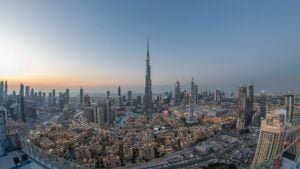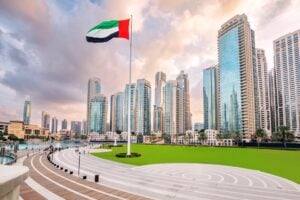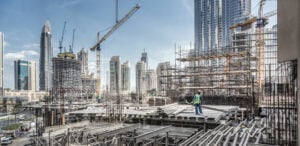

In Dubai’s ever-evolving skyline, there’s one truth investors can’t ignore: technology now defines real estate value as much as location ever did. Yet, many investors are still buying properties built with “2010 technology” — outdated systems, inefficient designs, and disconnected living experiences — while paying premium 2026 prices.
The Dubai 2040 Urban Master Plan has redrawn the city’s property map, emphasizing innovation, sustainability, and smart infrastructure. As a result, a digital divide is forming between properties designed for a connected future and those stuck in the past. If you’re serious about Dubai real estate investment, understanding this technological gap could mean the difference between exponential returns and missed opportunities.
Dubai’s Vision 2040: The Blueprint for a Smarter City
The Dubai 2040 Master Plan isn’t just an urban development agenda — it’s a complete reimagining of life, work, and sustainability. The plan aims to reshape Dubai into a “20-minute city,” where daily destinations are accessible within 20 minutes by walking or cycling, supported by intelligent infrastructure and innovation-led communities.
With projects such as Dubai Silicon Oasis, Expo City Dubai, and Dubai Creek Harbour, we’re witnessing a shift toward data-driven urban living — places where technology seamlessly integrates with daily life. This alignment of infrastructure and digital innovation is transforming how people buy, rent, and interact with property.
However, this very progress has widened the digital divide. On one side are developments leveraging next-gen tech — AI-enabled energy systems, smart sensors, and IoT integration — while on the other side are properties built for a pre-digital era, still relying on outdated management systems and inefficient layouts.
The Digital Divide in Dubai Real Estate
The digital divide in Dubai isn’t about internet access — it’s about property intelligence. Many investors, especially those purchasing resale or mid-tier developments, often overlook whether the property is built or retrofitted with digital integration.
Here’s how the divide manifests:
- Smart Infrastructure vs. Legacy Systems
New developments like Dubai Hills Estate or Expo City are equipped with automated lighting, cooling, and security systems managed through cloud-based apps. In contrast, older properties still rely on mechanical systems that waste energy and require constant manual intervention. - Data-Driven Communities vs. Static Neighborhoods
Modern communities are planned with AI-driven urban data — traffic flow, noise management, and even air quality sensors. Properties without these systems quickly become obsolete in a market that prioritizes sustainability and livability. - Eco-Efficiency vs. Overconsumption
With Dubai’s aggressive environmental targets for 2040, investors will find higher resale value in properties aligning with net-zero carbon goals. Buildings without smart energy management will face rising maintenance and retrofit costs.
The result? Buyers who ignore this digital evolution risk overpaying for properties that simply won’t hold value in Dubai’s tech-forward landscape.
Why 2010 Tech Doesn’t Belong in 2026
Think of it this way: buying an outdated property is like purchasing a smartphone without internet capability in 2026. It may still function, but it won’t compete.
In real estate terms, “2010 technology” refers to buildings that lack:
- Integrated smart home automation (lighting, cooling, access control)
- Energy-efficient design and AI-enabled utilities
- Community management apps for seamless resident experience
- Data infrastructure for future city connectivity
- EV charging stations or renewable energy integration
Paying 2026 prices for such properties is essentially investing in obsolescence. As Dubai real estate investment continues to shift toward future-ready ecosystems, investors need to evaluate not just square footage, but digital readiness.
Smart Real Estate Is the New Luxury
Luxury in Dubai once meant high ceilings, marble finishes, and skyline views. Today, luxury means intelligence — a home that learns, adapts, and improves daily living experiences.
Developers like Emaar, Sobha Realty, and Meraas are now embedding AI-driven systems into their new projects. For instance:
- Emaar’s Dubai Creek Harbour integrates real-time sustainability dashboards, allowing residents to track energy usage.
- Sobha Hartland II promotes “smart luxury,” offering complete home automation through mobile connectivity.
- Meraas Bluewaters Island adopts mixed-use innovations with intelligent mobility and smart parking systems.
These innovations not only enhance convenience but also future-proof investment value. A property’s ability to adapt to digital infrastructure will soon determine its long-term appreciation potential — just like location and architecture once did.
The Rise of the Tech-Savvy Investor
Dubai’s new generation of investors is driven by data, not just design. They’re analyzing projects with a sharper lens — looking beyond architectural aesthetics to understand digital sustainability and tech integration.
Key indicators smart investors look for include:
- Whether the development aligns with the Dubai 2040 Master Plan’s sustainable goals.
- Presence of AI-enabled property management systems.
- Renewable energy infrastructure and green certification.
- Connectivity to digital public services and smart transportation networks.
The message is clear: investing in a digitally backward property is like buying a luxury car without a navigation system — premium in price but limited in performance.
How the 2040 Master Plan Shapes Investment Strategy
The Dubai 2040 Urban Master Plan identifies five key urban centers — Deira, Downtown Dubai, Expo City, Jumeirah, and Silicon Oasis — each designed with unique digital and economic functions.
For investors, this offers a clear framework:
- Deira and Bur Dubai will focus on heritage and connectivity, ideal for mid-tier smart renovations.
- Downtown Dubai and Business Bay will remain central business hubs with AI-driven smart services and digital housing ecosystems.
- Expo City represents the city’s experimental hub — fully sustainable, carbon-neutral, and AI-integrated, perfect for long-term tech-focused portfolios.
Understanding this zoning helps investors predict where digital property value will rise fastest.
For instance,
is quickly becoming the benchmark for sustainable and intelligent communities. Investing here today means aligning with Dubai’s future-proof economy.
Avoiding Obsolete Investments: Signs You’re Buying the Past
To avoid overpaying for outdated tech, every Dubai real estate investment decision should go through a digital audit. Look for these red flags:
- Property lacks automation or digital access systems.
- No mention of smart utilities, renewable integration, or sustainability certifications.
- Community management still relies on manual procedures.
- Developer or property website doesn’t highlight digital infrastructure.
- Pricing relies solely on location rather than future-readiness.
If a property fits these patterns, you’re essentially buying 2010 technology at inflated 2026 prices.
The Role of Data and AI in Real Estate Valuation
As Dubai moves toward a data-first governance model, property valuation is gradually being influenced by real-time digital metrics — energy performance, connectivity index, and social sustainability scores.
AI-driven valuation tools will become the norm, assessing not just market trends but also digital compatibility. Properties integrated with IoT monitoring and smart systems will likely attract higher valuations due to their long-term cost efficiency and alignment with regulatory goals.
Platforms like
(Real Estate Self Transaction) already allow digital title management — one of many signals that real estate profitability is tied to technological adoption.
The New Price of Innovation
The market is clear: tech-driven developments may command a premium today, but they’ll save costs and gain appreciation in the long run.
Here’s why:
- Lower operational costs due to energy optimization.
- Higher tenant retention through smart community apps.
- Regulatory compliance with Dubai’s sustainable mandates by 2040.
- Resale advantage in an increasingly digital market.
By 2030, as urban analytics and automation become standard, outdated properties will need heavy retrofitting — dramatically lowering ROI for those who ignored digital integration.
Bridging the Digital Divide as an Investor
To stay ahead, investors can:
- Prioritize smart-certified developments — look for LEED, WELL, or Estidama ratings.
- Adopt a “digital-first due diligence” approach — evaluate infrastructure, automation, and data systems before purchase.
- Diversify portfolios across emerging smart zones like Dubai Creek Harbour, Expo City, and Jumeirah Village Circle.
- Engage in smart property management platforms for transparent and efficient asset tracking.
- Partner with tech-forward developers who align with Dubai’s sustainability roadmap.
Bridging this divide is about owning assets that will appreciate in a connected world, not depreciate in a dated one.
Final Thoughts: The Future Belongs to Smart Investors
Dubai’s real estate market has always rewarded visionaries — those who saw opportunity before others did. In 2026 and beyond, vision will depend on understanding technology’s role in property value.
The Dubai 2040 Master Plan isn’t just shaping new districts; it’s redefining what property ownership means in a digital era. As investors, the choice is simple: continue buying into the past or invest in smart, sustainable communities that define the future skyline.
Don’t buy a 2010 apartment for 2026 prices. Buy a 2040-ready property that grows alongside Dubai’s innovation.